At Beijing's Emergency Management Expo, China's Comms Vendors Bet on Layered Networks, Not One
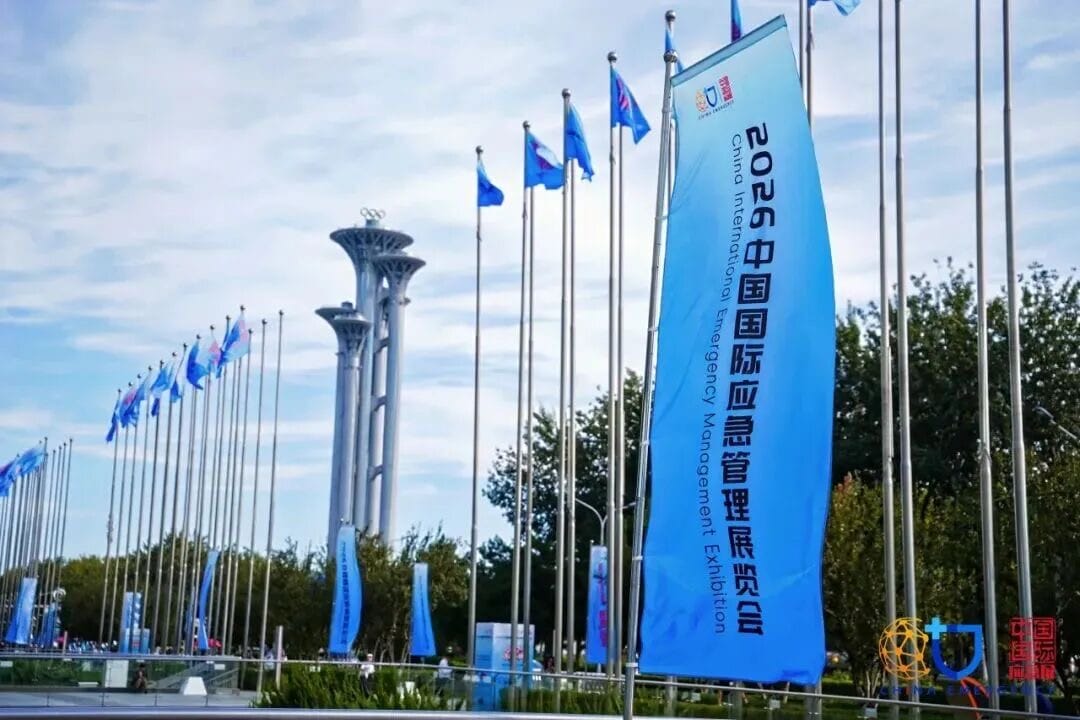
At this week's China International Emergency Management Expo in Beijing, 400+ exhibitors showed off drones, robots, and rescue gear.
Share ↓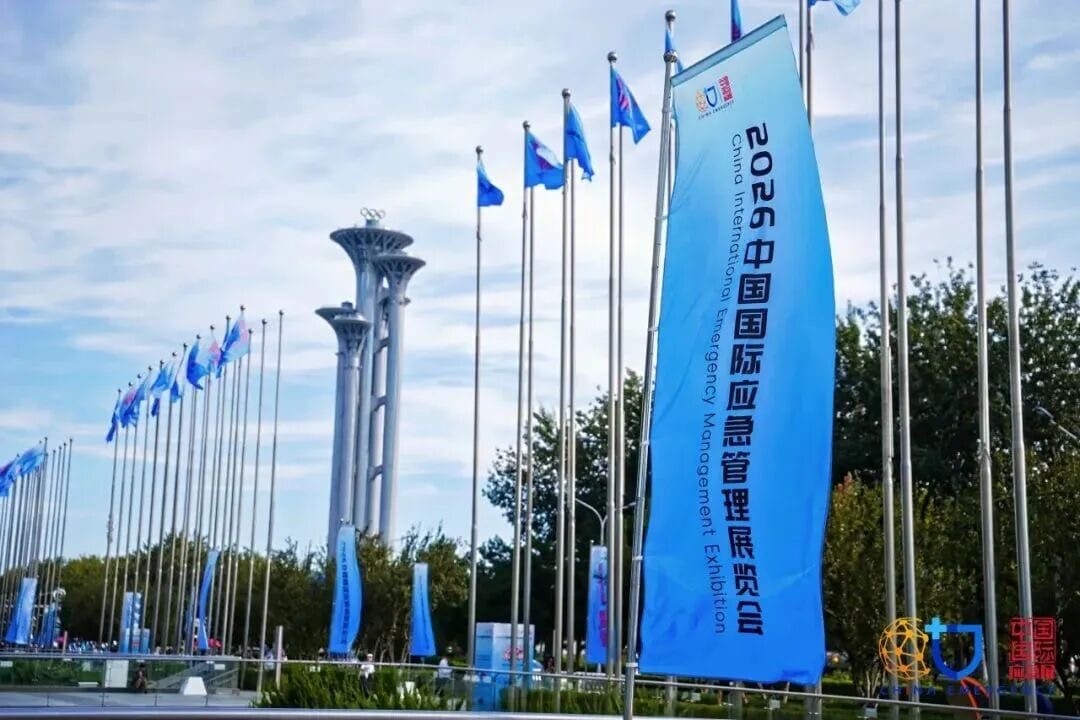
At this week's China International Emergency Management Expo in Beijing, 400+ exhibitors showed off drones, robots, and rescue gear. But the more interesting story was in the radio and network equipment: China's critical communications sector is converging on a layered model for surviving what's locally called "san duan(三断)” — simultaneous loss of network, power, and road access.
The assumption used to be that broadband (5G, LTE) would eventually replace narrowband professional radio (PDT, DMR, TETRA-class systems). This expo suggested the opposite is happening: narrowband isn't going away — it's becoming one layer in a stack.
The stack, by vendor:
Victel (维德), a longtime PDT/DMR specialist, showed self-organizing mesh and rapid-deployment kit built on the premise that if base stations and backhaul are gone, the network needs to regenerate itself locally — no fixed infrastructure required.
Eastcom (东方通信) paired PDT/TETRA handsets with 5G multi-mode terminals, explicitly pursuing convergence across narrowband, 5G private networks, 3GPP MCX, and public networks rather than picking one.
Hytera (海能达)framed its offering around three layers: an AI-driven command-to-execution loop, "edge-to-edge, top-to-bottom" coverage, and a graduated response from routine ops to extreme conditions. Its standout piece addressed a real gap in China's system: the low-cost, low-investment comms needs of township and village-level government, which sit below the county level that most emergency-response planning targets. A 370MHz solution links villages directly to county and provincial command using low-cost trunked and conventional dual-transceiver gateways and economical terminals — narrowband infrastructure aimed at administrative geography, not a market segment Western TETRA vendors typically target.
Huawei(华为)brought a portable 5G base station (MiniRapid Pro) integrating baseband unit, radio unit, core network, and IMS in one box — deployable by backpack, vehicle, or aircraft, with satellite/public-network/private-CPE backhaul options so it can stand up as an independent cell site and link back to city or on-site command. Huawei also showed a ruggedized emergency terminal built for BeiDou short-message texting and independent operation when networks are down.
SinoMartin (希诺麦田)unveiled the expo's lightest setup: a drone, an airborne tri-network relay, an air-to-ground data link, and a satellite terminal — four pieces of gear, roughly 15 minutes to get a working 5G signal up in a dead zone.
Why this matters beyond China:most Western public-safety comms strategy (FirstNet in the US, ESN in the UK) has centered on migrating narrowband LMR users onto a single resilient broadband network. China's vendors are betting on the opposite architecture — multiple independent network types (narrowband, 5G, mesh, satellite, low-altitude relay) designed to fail independently and back each other up, rather than one network engineered to not fail. Given the frequency of large-scale disasters requiring exactly this kind of graceful degradation, it's a design philosophy worth watching regardless of which market you're in.