When the Network Goes Dark: Inside China's Pre-Wired Flood Resilience Network
251 drones. 123,000 villages. Built before the rain falls — not dispatched after it does.
Share ↓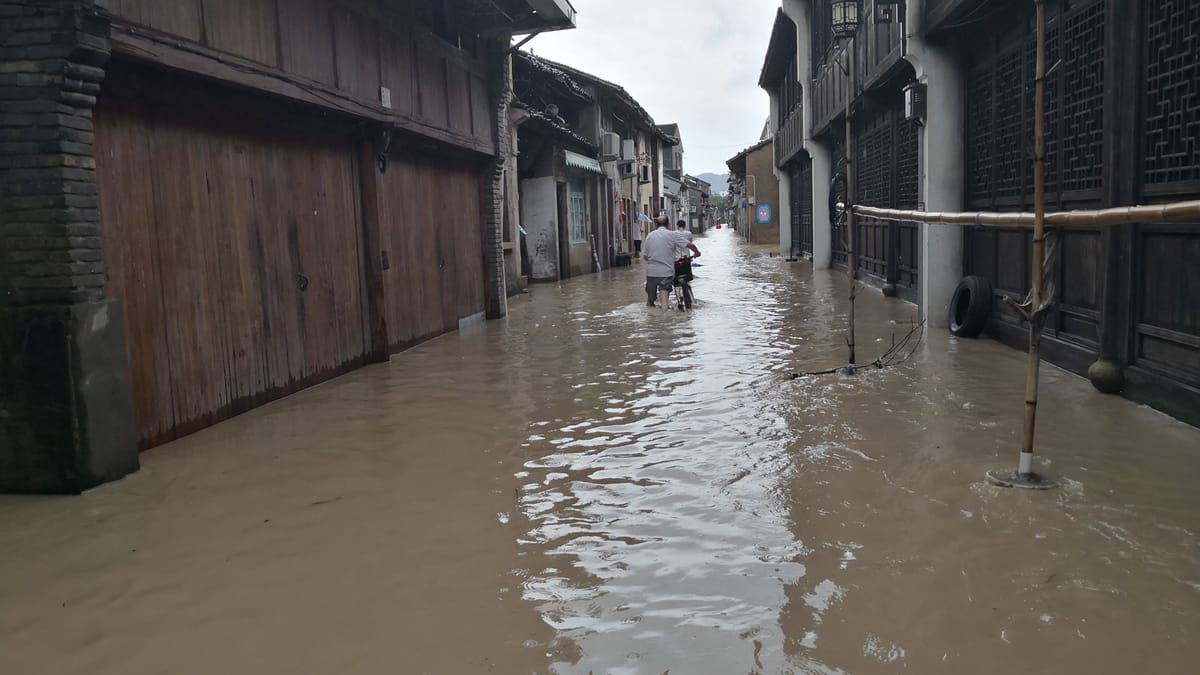
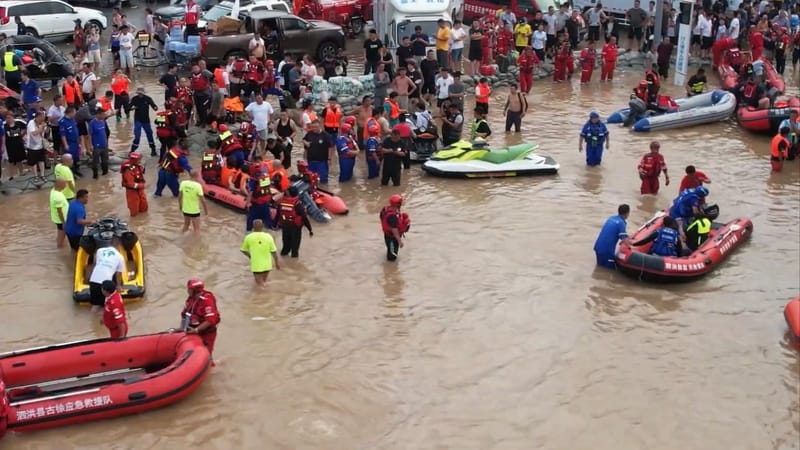
There's a particular kind of communications failure that disaster planners dread more than any single point of breakage: the "triple outage." No road. No network. No power. Not sequentially — simultaneously. The bridge is out, so repair crews can't reach the damaged tower. The tower is down, so there's no way to call for the bridge crew. And without power, even the equipment that survived has a countdown clock.
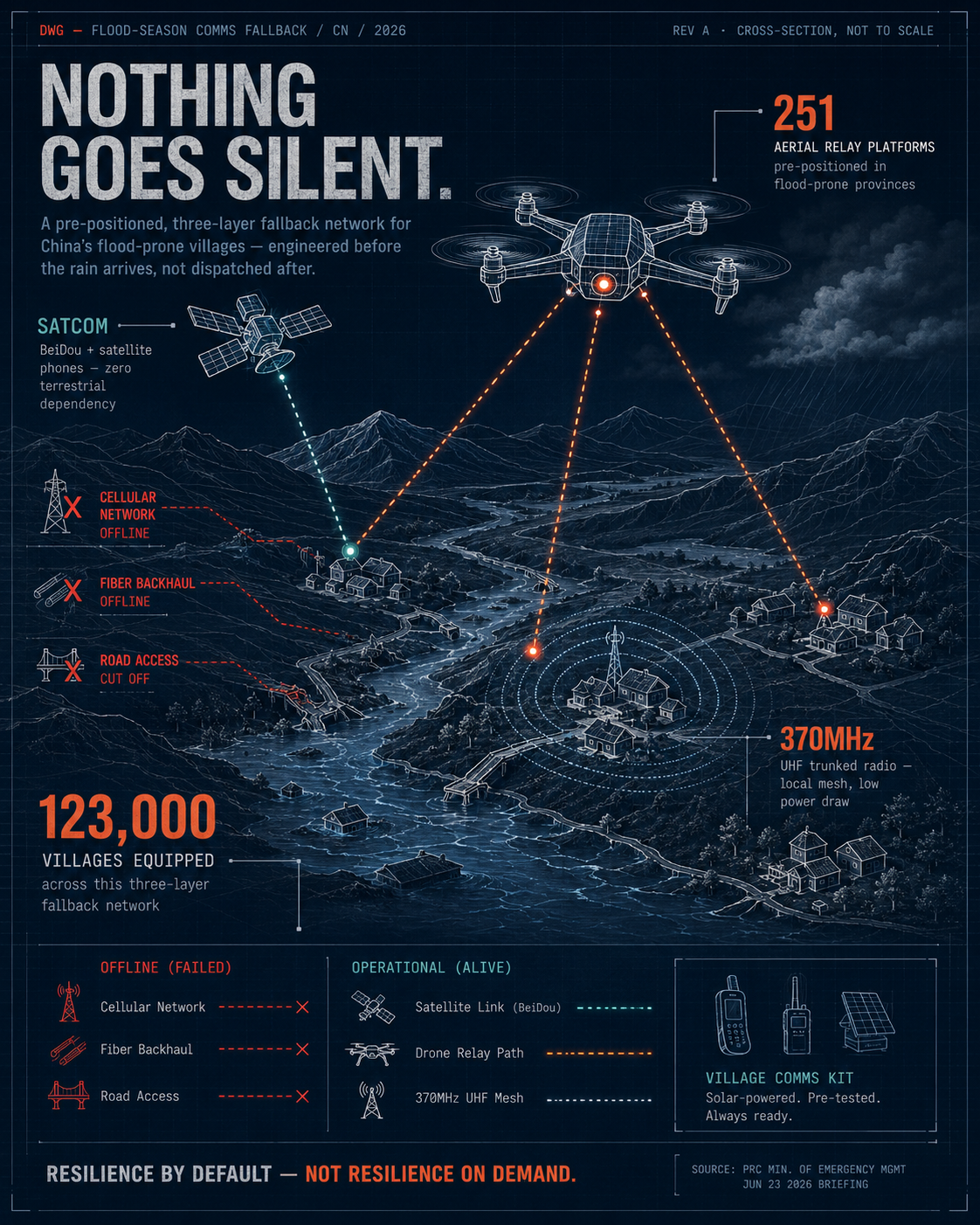
China's Ministry of Emergency Management spent part of a press briefing this week describing how it's trying to design around exactly that failure mode, ahead of this year's flood season rather than in response to it. Buried in the policy language was a number worth sitting with: 251 large and medium drone communication platforms, pre-positioned across flood-prone provinces, plus 123,000 disaster-prone and remote villages already equipped with satellite phones, UHF trunked radios, and BeiDou short-message terminals as standing fallback infrastructure.
That's not a disaster-response number. It's a procurement and deployment number, set before anyone knows whether this season's rains will be bad at all.
The logic of the three-layer stack
What's being described is a deliberately layered degradation path, not a single fix. Each layer assumes the one above it might fail.
Drone communication platforms sit at the top. When ground infrastructure is damaged or simply unreachable, these function as temporary aerial base stations, restoring a working radius of voice and data coverage without waiting for a repair crew to physically get there. This is the layer built for speed and area coverage.
Satellite phones and BeiDou(北斗)short-message terminalsform the layer underneath. These don't depend on local infrastructure at all — no tower, no fiber backhaul, no local power grid. That makes them the right tool for the villages tucked into terrain where even drone coverage has limits: deep valleys, dense mountain folds, the kind of geography where line-of-sight itself is the constraint.
370MHz UHF trunked radios are the base layer — the oldest technology of the three, and arguably the most important. Low power draw, short range, but close to indestructible in the field. When everything else has failed and a village still has no working uplink to the outside world, this is what keeps coordination possible within the village: between the local Party secretary, the volunteer rescue team, and the household that hasn't been reached yet.
None of these three technologies is new or exotic. What's notable is that they've been pre-positioned together, as a designed stack, at a scale that covers a meaningful fraction of China's most disaster-exposed rural geography.
"Pre-positioned" is the part that travels
It's worth being precise about what's actually unusual here, because the individual technologies aren't it. FirstNet in the US runs deployable cell sites — Satellite Cell on Light Trucks, Cell on Wheels — that can roll into a disaster zone within hours. Verizon Frontline operates its own fly-away kits and portable infrastructure. Satellite messaging has become a checkbox feature on consumer smartphones. The toolkit looks similar almost everywhere.
The difference is the operating model. Western deployable-asset programs are largely carrier-led and incident-triggered: equipment sits in a depot or on a truck, and gets dispatched once a specific community has a specific, identified outage. It's a reactive logic, optimized for speed of response once a trigger fires.
What China is describing is closer to resilience by default— pushing the fallback equipment out to the edge in advance, into the actual villages, before any specific storm has a name or a forecast track. The cost structure is completely different: more capital sitting idle in calm years, in exchange for not having a gap between "disaster happens" and "help can physically reach the people who need to coordinate the response."
Neither model is obviously superior in the abstract. Pre-positioning at this scale only makes sense if you have a state apparatus willing to absorb the standing cost across 123,000 communities, most of which won't see a serious flood event in any given year. A market-driven telecom sector, accountable to quarterly capital efficiency, is structurally biased toward the deployable-asset model instead — hold fewer assets, move them faster, accept a short reactive lag.
But as flood seasons become less predictable and more severe across multiple continents, the gap between these two philosophies is going to keep showing up in the data: not in the technology specs, but in the minutes (or days) between when a triple outage happens and when a community first regains the ability to make contact with the outside world.
Why this is worth tracking
For anyone watching the critical-communications space — public safety operators, satellite messaging vendors, drone-platform manufacturers, anyone selling into the resilience-infrastructure market — this is a useful data point on where centrally-planned deployment can outpace carrier-led models, and where it can't.
It's also, separately, a preview of a question the whole industry is going to have to answer as resilience requirements get written into next-generation network standards rather than left to ad hoc disaster response: does "resilient" mean built to recover fast, or does it mean built so there's nothing to recover from in the first place?China's flood-season numbers this week are a pretty direct answer to that question, even if the rest of the world hasn't quite decided yet.
Source: PRC Ministry of Emergency Management press briefing, June 23, 2026.