India: designing a national BB-PPDR network for about three million users
MHA's consultation on a pan-India BB-PPDR architecture closed on 5 November 2026. A proof of concept ran in Guwahati in June. No vendor, model or final spectrum decision yet.

Last updated 8 November 2026 · Status: Planning · Model: not yet chosen
| Programme | Pan-India Broadband PPDR (BB-PPDR) network |
| Lead | Ministry of Home Affairs; Directorate of Coordination Police Wireless (DCPW) |
| Services sought | MCPTT, MCData, MCVideo |
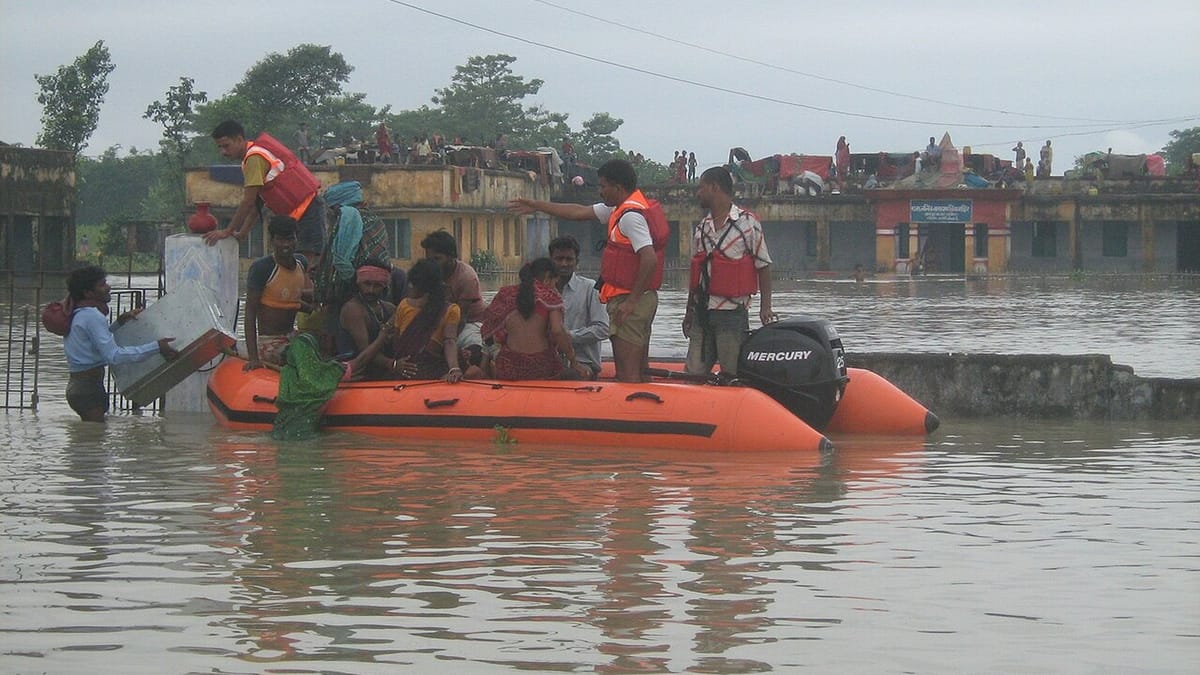
| Intended users | State and UT police, central armed police forces, NDRF and other public safety agencies; about 3 million envisaged |
| Spectrum | 814–824 / 859–869 MHz in principle; not final |
| Latest step | Architecture consultation, 23 October – 5 November 2026 |
Background
India's police run separate narrowband networks state by state. In 2018 the telecom regulator TRAI recommended a national BB-PPDR network on 3GPP PS-LTE, using a hybrid of a dedicated network in metros, border districts and disaster-prone areas plus commercial networks elsewhere, steered by a special-purpose vehicle under the home ministry, with 2 × 10 MHz of dedicated spectrum (TRAI).
2026
- Proof of concept. A BB-PPDR trial was held in Guwahati in June 2026.
- Spectrum. 814–824 / 859–869 MHz has been earmarked in principle and about 3 million users are envisaged (tele.net). Spectrum has not been easy: in May 2026 Mint reported under the headline "Home ministry's hope for spectrum hits a wall".
- Consultation. On 23 October 2026 MHA invited public and stakeholder input on the reference architecture, with a concept note published by DCPW; responses closed on 5 November (TeamLease RegTech). The consultation does not select a vendor, a spectrum band or a rollout date.
What to watch
- The final architecture: dedicated, commercial or hybrid, and who runs it.
- A spectrum decision, and how it relates to the commercial 800 MHz band.
- Make-in-India and trusted-source rules, which will shape which vendors can bid.
Part of Asia Watch, our market-by-market tracker of public safety broadband in Asia-Pacific. Spotted something out of date? Write to hello@criticalcomms.asia.