Amazon's Ring has finally announced a security drone, six years after the first one was shown. It will not ship until the FCC authorises it, under rules that since December 2025 have shut new foreign-made drones and drone parts out of the US market.
France's DGA has ordered two IRIS very-high-resolution reconnaissance satellites from Airbus and Thales Alenia Space for more than €1.5bn, replacing the CSO constellation beyond 2035.
At a CCSA meeting in Beijing, operators, vendors and chipmakers converged on an AI-native, intent-driven 6G core. Mission-critical communications did not come up, though 3GPP's 6G requirements include it, among them interworking with China's PDT police radio.
Q3 2026 numbers show a company widening its definition of "mission critical" — drones, counter-drone and AI video now pull alongside P25. Here is what the quarter means from where Asia sits.
Five months after our first tracker, Asia's public safety broadband plans are splitting into three models: dedicated national builds, priority on commercial networks, and markets still deciding. India's new consultation shows how open the choice remains.
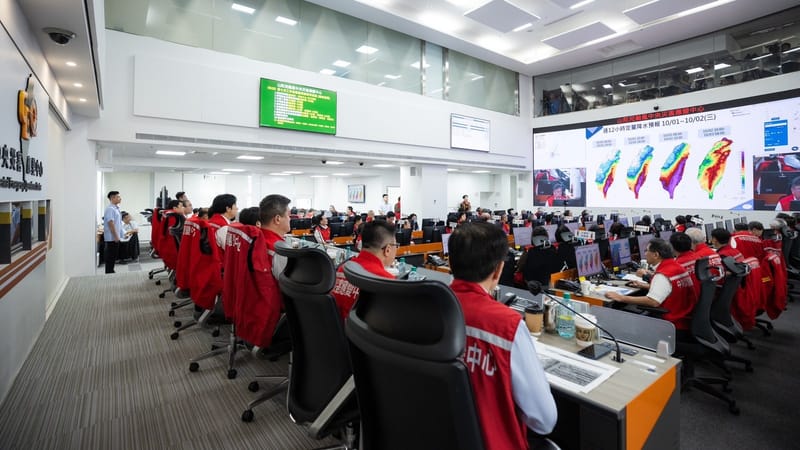
China's emergency management plan for 2026–2030 requires communications to keep working when roads, power and networks fail together. Read alongside the rest of the plan, it points to a layered system: tethered drones, satellite, low-altitude aviation and warning delivery down to the village.
SpaceX's purchase of 800 MHz spectrum puts a satellite operator directly next to the US public safety band. The interference rules that protect first responders there were designed for towers, not satellites. Three weeks later, the FCC voted to open far more spectrum to direct-to-device services.