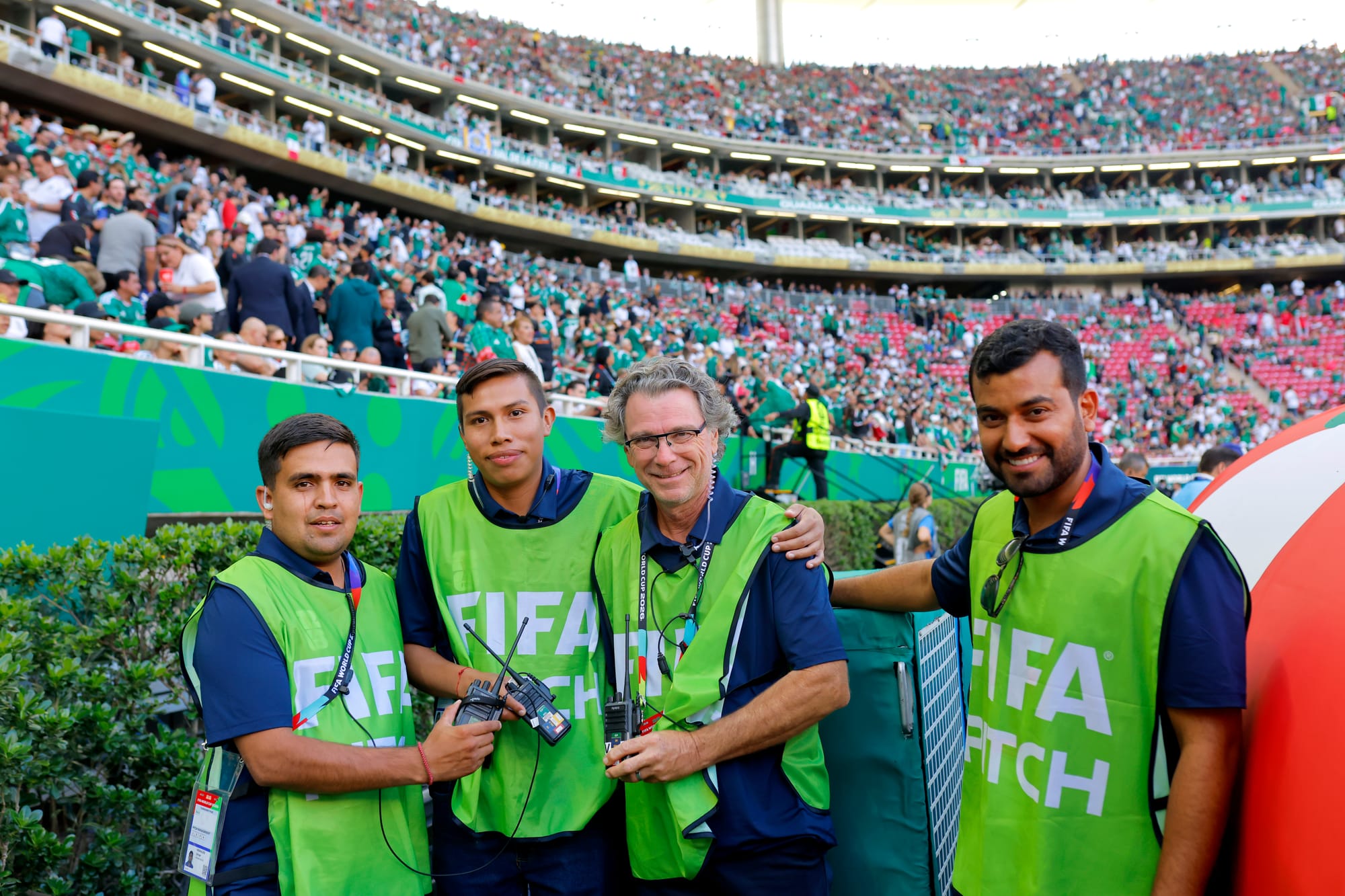
The other team that never misses a World Cup.
Every four years, I watch the World Cup the way most people in my industry do — with one eye on the pitch, and one eye on everything else keeping the stadium running.
Share ↓
Every four years, I watch the World Cup the way most people in my industry do — with one eye on the pitch, and one eye on everything else keeping the stadium running.
The football is obvious. The communications infrastructure is invisible. And that’s exactly how it’s supposed to work.
This year, at Guadalajara Stadium in Mexico, the venue’s mission-critical wireless network was built by Hytera. Not as an official sponsor. No pitch-side branding, no ad spots. Just a Chinese professional radio company quietly doing what it’s done at the last three World Cups in a row — making sure tens of thousands of people can be in one place without the security, medical, and operations teams losing the ability to talk to each other.

That sounds simple. It isn’t. Steel structures scatter signals. Dense crowds saturate spectrum. Dozens of teams — each with different communication needs, different urgency levels, different failure tolerances — have to share the same airspace without stepping on each other. When it goes wrong, nobody notices the football.
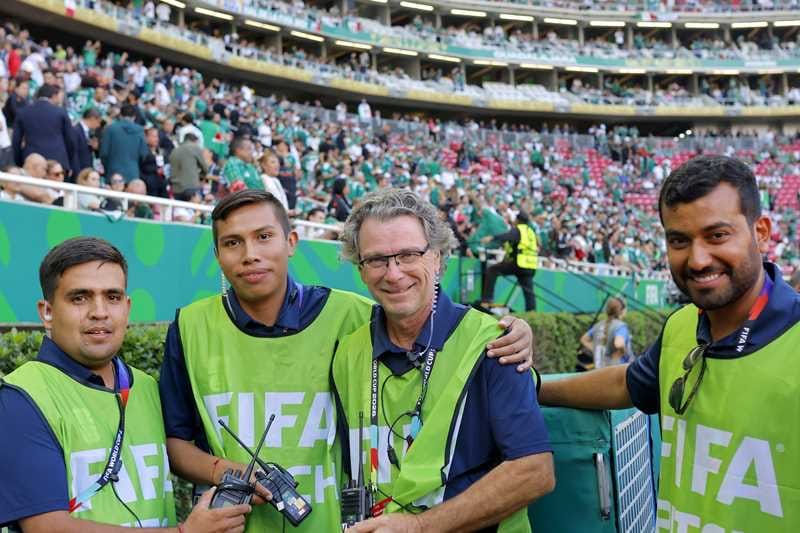
When it goes right, nobody notices the radio network either. Which is the point.
What I find more interesting than any single deployment is the pattern. World Cup 2018. World Cup 2022. World Cup 2026. Beijing Winter Olympics. Paris 2024. G20 summits. APEC. Osaka Expo. At some point, “Chinese company wins international contract” stops being a story about a single win and starts being a story about a capability that’s been quietly, consistently verified at the world’s most unforgiving venues.
The critical communications industry doesn’t reward press releases. It rewards track records.
Three World Cups running. Hasn’t missed a match.